What is a Regular Boiler and How Does it Work?
In this article, we answer all your questions about regular boilers.
What is a regular boiler?
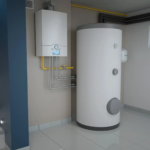
Regular boilers are one of the oldest types of boilers around. They are also known as ‘traditional’ or ‘conventional’ boilers. The boiler is fed cold water from a water storage cistern (commonly called a ‘tank’) which is stored in the attic. It also requires a hot water storage cylinder to be able to provide hot water for daily use.
- Known as 'heat only' boilers
- Requires a cistern tank (in loft)
- Also requires a storage cylinder

How does a regular boiler work?
To provide heating, cold water from the cistern in the loft feeds down to the boiler. The cistern is usually as high above the boiler as possible to help improve the water flow in your system.
When you fire up the boiler (either by turning on the hot tap or switching on the heating), that cold water is then warmed up by a heat exchanger. The heated water is then pumped to a hot water storage cylinder (which is usually in an airing cupboard) where it is stored and circulated until you need it. From there, valves will direct the hot water to either your heating or your taps/outlets.

Difference between regular & combi boilers
A combi boiler is a more modern system, and the most commonly installed type of boiler in the UK today.
A combi boiler is an all-in-one unit that does not need a cistern in the attic or a hot water cylinder. The combi takes its cold water supply directly from the mains and heats it on demand.
This means that there is no large store of hot water, so they are generally only recommended for small to medium-sized homes which use less hot water.
Difference between regular & system boilers
A regular boiler and a system boiler are very similar in that both rely on a hot water storage cylinder to keep a store of hot water ready for your taps.
The key difference, however, is that a regular boiler is supplied with cold water via a cistern in the attic, while a system boiler takes its water supply directly from the mains.
This means that you don’t need to have a cold water cistern in your attic.
Is a regular boiler right for your home?
There are many things to consider when choosing which type of boiler is right for your home. It’s good to weigh up the pros and cons so that you get the most suitable set-up for your needs.
Can meet high demand for heating and hot water
If you live in a home with several bathrooms or have an especially high demand for heating and hot water, a regular boiler is a great choice. With its large storage capacity for hot water, it means multiple taps and outlets can be used simultaneously.
Simple to replace an older system
If your home already has a regular boiler system, it will prove less disruptive and costly to simply replace it with a newer version.
They've become more efficient
Regular boilers that are non-condensing should be replaced with a new condensing one, as it will make your energy consumption much more efficient and help to reduce the cost of your bills. Some regular boilers can now reach efficiencies of as high as 97%.
Solar compatible
Cons of a regular boiler
- Take up a lot of room
- Hot water isn't instant
- Expensive installation