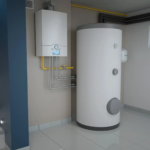
The different boiler fuel types
Most homes in the UK are connected to the gas grid so are most likely to have a natural gas boiler in their home. Properties in rural areas which aren’t connected to the gas grid will use an alternative fuel source such as oil, electricity or biomass (wood pellets).
More and more homeowners (even those who have access to gas) are choosing to install a boiler or heating system which uses renewable fuel such as a biomass boiler or a heat pump to lower their carbon emissions.


The fuel types
Gas Boilers
Gas boilers are the most common type of boiler in UK homes as the majority are connected to the gas grid and so opt for a gas boiler.
Advantages of gas boilers
-
Cheaper to run than electric boilers:
It’s suggested that gas is around three to four times cheaper than electricity per kWh. This makes it a much more economical option when heating your home despite a gas boiler not being 100% energy efficient, in comparison to an electric boiler, you will get more heat for your money with gas. -
Cleanest fossil fuel:
Despite fossil fuels not being good for the environment, gas creates less than half of the CO2 emissions of oil and a third of those produced by coal. This makes it the cleanest fossil fuel of those available.
Disadvantages of gas boilers
-
Expensive to be connected to the gas grid:
You must be connected to the gas network to power a boiler with gas but this can be expensive to do if you aren’t already connected.
Electric Boilers
Advantages of electric boilers
-
Perfect for small households:
An electric central heating boiler is a great option if you don’t have much space and are looking for a compact boiler. They have fairly simple technology and are usually cheaper to install than other boiler types. -
Reliable alternative to gas:
They are a great alternative to a gas boiler as they don’t need to be connected to the gas mains, reducing the needs for Gas Safe Registered Engineers, and so means there isn’t a risk present from carbon monoxide. -
Highly energy efficient:
An electric boiler is around 99% efficient.
Disadvantages of electric boilers
-
High cost and reliance on electricity:
If your property is prone to power cuts or outages regularly, this boiler type may not be suitable for your household as it runs purely on mains electricity. Also, since it only runs on electricity, energy bills and running costs for electric heaters will cost a lot more in comparison to energy bills from a gas boiler.
Oil Boilers
Oil boilers are usually found in properties that can’t be connected to the gas mains and act as an excellent alternative to electric boilers if you don’t want to pay for the expense.
Advantages of oil boilers
-
No need for a gas supply:
If your property is not connected to the gas mains and has no way of doing so, oil boilers are one of the most cost-effective alternatives.
Disadvantages of oil boilers
-
Oil is expensive:
Oil is one of the most expensive fossil fuels and it’s running out meaning it’s not always available and on-demand for you when you need it most. Some oil suppliers will insist on you paying for your oil on delivery, which you have to remember to bulk purchase in advance, rather than in monthly instalments making oil a large financial cost. -
Storage space required for an oil tank:
When you do get your oil delivered, you will then need to store it in an oil tank on your property somewhere until you need to use it. This can take up a great deal of space, especially if you have it above ground, which needs to be placed on level, non-combustible soil.
LPG Boilers
Advantages of LPG boilers
-
More compact and a range of options:
Most LPG boilers are smaller in size than their oil or gas counterparts, often having a lower noise output. This means big name brands such as Worcester and Vaillant can have a wider range of models. -
A cheaper and cleaner boiler option:
One of the cheapest boilers of the different types of boiler we’ve discussed, LPG boilers are not only good for your wallet but the environment too. Despite it still being a fossil fuel, it produces around 15%-20% less carbon.
Disadvantages of LPG boilers
-
Expensive fuel cost:
The unit price per kWh of LPG is higher than both natural gas and oil. -
Bulk ordering and storage:
Like oil, LPG also needs to be ordered in bulk in advance of you running out and stored in a storage tank on your property which can take up a lot of space.